The 15-Meter Tower: Leading by Example
August 14, 2026
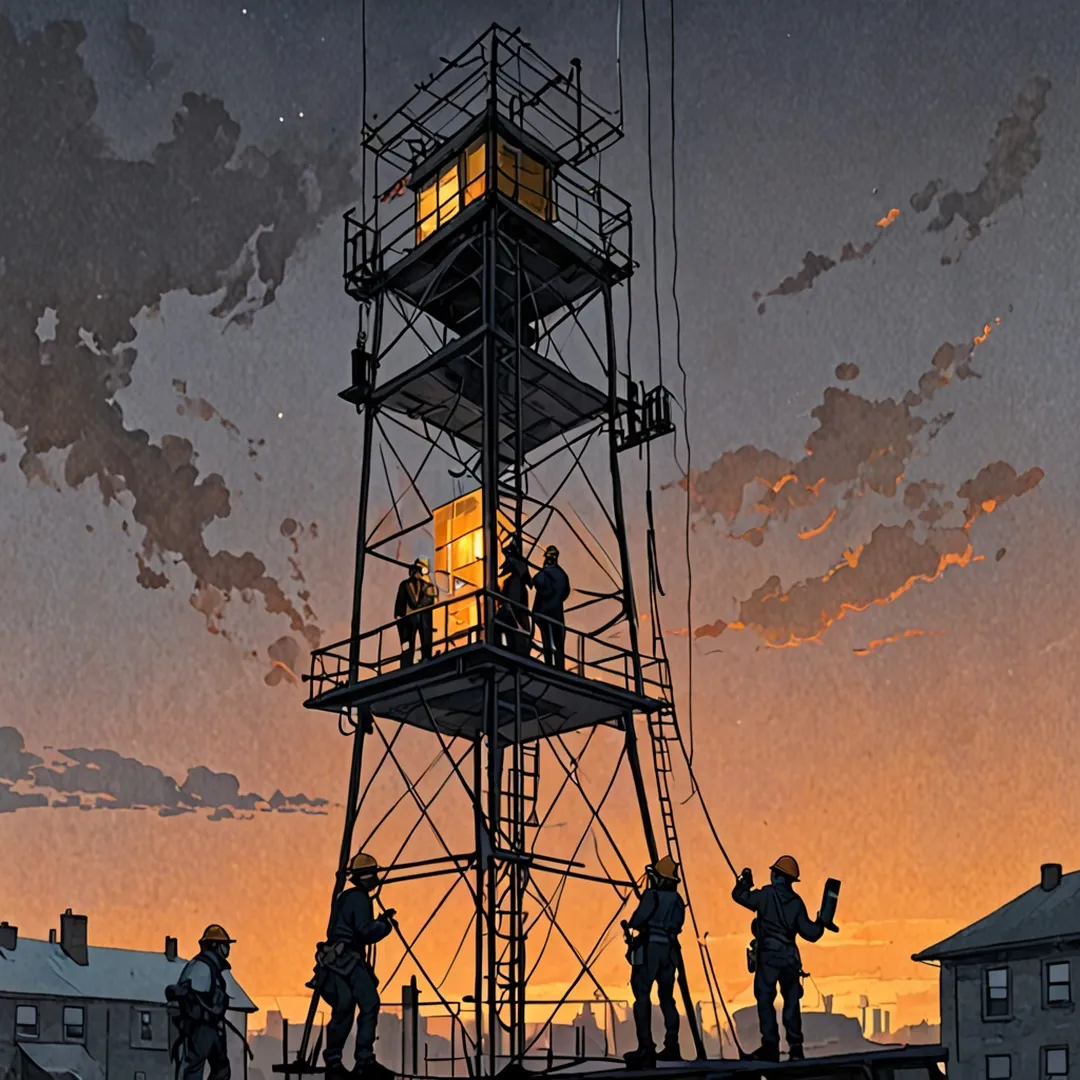
A management fable inspired by leading by example from “Traction” (Gino Wickman).
Authority is not decreed, it is demonstrated
Gino Wickman says it plainly: exceptional leaders do not manage through arrogance or from an ivory tower. They lead with consistency, with frontline presence, and by example. Real operational authority is never imposed by decree: it is earned by showing you are willing to take on the same risk and the same effort you demand from your team.
It is easy to say. The proof lives in the moment when the task is frightening and everyone on the team looks at the leader to see what they do.
The story
During the live broadcast of a massive outdoor event, Aura Media faced a critical operational situation. To guarantee the master signal, a heavy broadcast camera, with its operator, had to be positioned atop a 15-meter scaffolding tower.
Conditions were harsh. Sudden wind gusts made the metal structure sway, the height triggered vertigo, and the camera technicians hesitated to climb given the obvious risk.
Sofía, the Technical Director, watched her team hesitate. She gave no empty motivational speeches. She did not appeal to hierarchy or threaten sanctions. In silence, she strapped on the first safety harness, hooked the lifeline, and climbed the 15 meters of scaffolding step by step until she reached the top platform.
Up there, braving the wind, she connected the transmission cables, calibrated the video signals with the mobile unit, adjusted the tripod, and locked the optical framing. She personally verified the solidity of the platform.
Once the technical position was secured, she came down calmly, looked at her lead operator, and handed him the harness.
The operator climbed without a moment’s hesitation.
During the three days the coverage lasted, the operator stayed at the summit, but he was never alone. Sofía personally took command of ground support: she set strict two-hour shift rotations, sent up hydration and hot food, and kept continuous radio contact to monitor the well-being of every technician on the ground and at height.
Years later, at a panel on building loyal, highly committed teams in high-pressure projects, Sofía summed up her core leadership principle:
“Leadership is not shouting orders from a protected tent while others face the wind. It is climbing first, proving with actions that the task is possible, and then staying on the ground watching the backs of those on the front line. Whoever is not willing to put on the harness has no right to ask their team to climb the tower.”
What senior leadership should learn
1. Lead from the front line. An operations leader never demands that the team take a technical or logistical risk they have not personally executed or validated in the field. Example is not a motivation technique: it is the proof that the demand is legitimate.
2. Servant leadership is real support. Team respect is not won in a boardroom. It is built in the trenches, by securing rotations, hydration, and the physical and mental protection of the people who execute. Sofía did not just climb first: she also stayed on the ground looking after the rear guard for three days.
3. Psychological safety comes from consistency. Trust appears when team members see the leader take responsibility for the difficulty before delegating it. When the boss puts on the harness first, the team understands it is not a sacrifice: it is a shared standard.
Wickman’s lesson fits in one sentence that anyone can say and few can demonstrate: leadership is not what you order, it is what you are willing to do first.
Fable inspired by leading by example from “Traction: Get a Grip on Your Business” (Gino Wickman).