From 400 to 1,200: The Flywheel Effect and the Scaling Nobody Sees
August 12, 2026
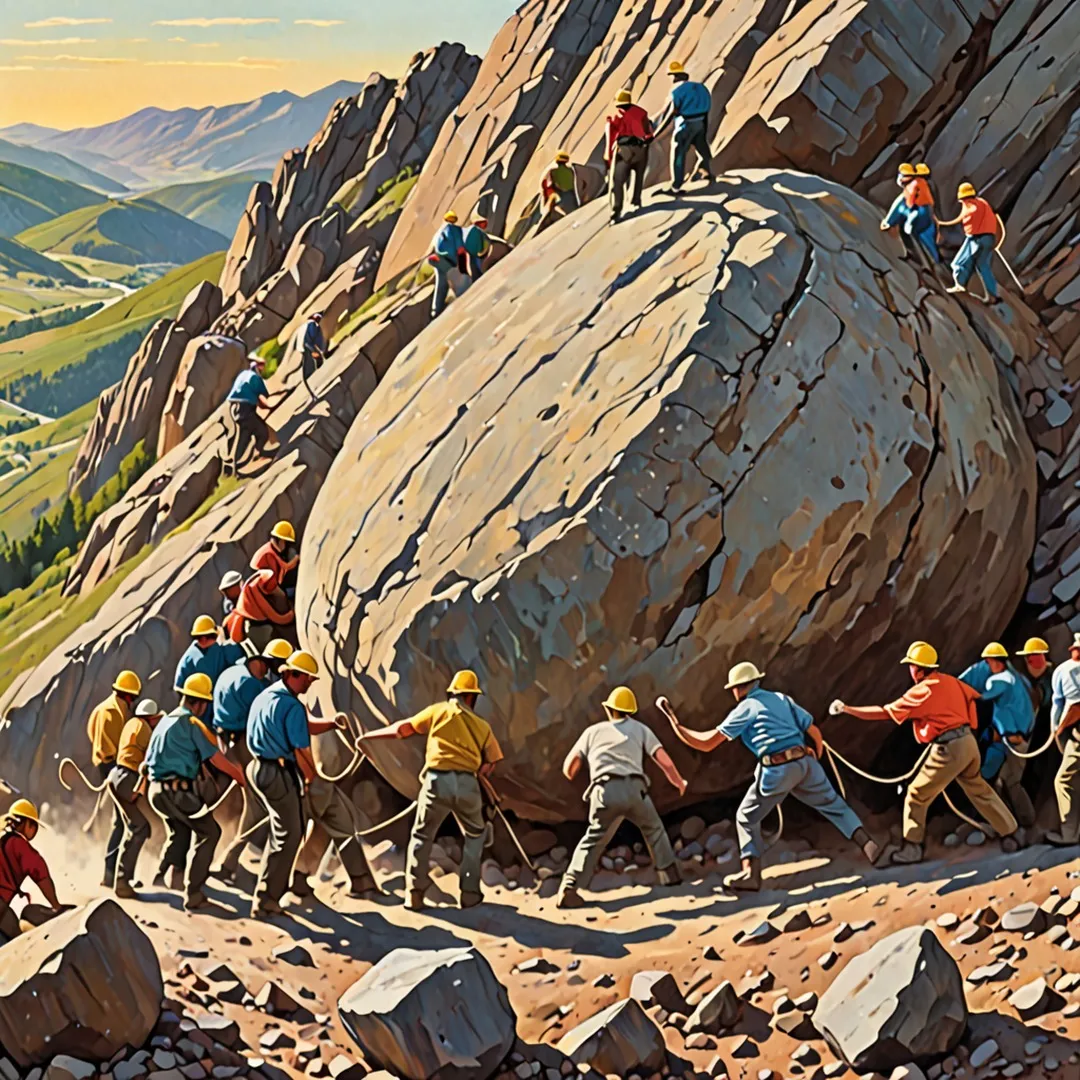
A scaling story inspired by “Good to Great” by Jim Collins.
The Flywheel Effect
Jim Collins uses a powerful image to explain why great transformations are almost never visible in the moment: a flywheel, that heavy iron wheel used to store energy. You push, and nothing happens. You push again, and again, and again. The flywheel barely moves. It’s discouraging. Most people give up here, convinced the effort is pointless.
But you keep pushing. One day, the flywheel completes its first full turn. Then another. And then it starts spinning on its own weight, faster and faster, unstoppable. The transformation didn’t happen through a miracle or a magic campaign: it happened because someone pushed patiently and constantly, turn after turn, until the flywheel’s weight started working in the organization’s favor.
The Story
A service organization with regional presence had approximately 400 employees. Leadership decided to launch a strategic drive to triple its impact and reach. But instead of chasing the miracle, the technical and operational leadership designed a methodology built on four pillars of discipline:
1. Honest and inclusive diagnosis of current reality. Before setting illusory goals, a massive data harvest was conducted, gathering concerns from the frontline all the way to senior management. Every department contributed to diagnosing the real situation, the bottlenecks, and the capability gaps. No one imposed a vision from an ivory tower: first, they listened.
2. Fixed destination with atomized dynamic execution. A clear, immovable goal was defined: scale to more than 1,200 people with national and international coverage. But execution was not rigid. The plan was atomized into micro-goals adaptable to every operational level. The destination was fixed; the path was as dynamic as reality demanded.
3. Massive training and professionalization. The logic was relentless: to triple the scale, you must triple the talent’s capability. An intensive program of technical training and competency development was deployed at every level, from operational staff to middle management. You don’t scale an organization: you scale the people who hold it up.
4. Transparent communication and servant leadership. Silos were eliminated. Leadership focused on supplying resources, removing barriers, and serving the executing teams so they could meet their goals autonomously. The leader’s role shifted from controlling to enabling.
The Outcome
The organization grew from 400 to more than 1,200 employees in a few years. But the most important part was not the numerical growth: operational effectiveness and efficiency broke all historical records. The flywheel, after years of constant pushes, was already spinning on its own weight.
What Senior Leadership Should Learn
- Fixed goal, dynamic execution. Strategy needs an immovable compass, but tactical steps must be atomized and adaptable to the real terrain. Rigidity in the destination and flexibility in the path are not contradictory: they’re complementary.
- Investing in human capacity is the only way to scale. You cannot multiply operations without massively professionalizing and training the workforce. Growth without training is an accident waiting to happen.
- The flywheel starts at the frontlines. Great organizations don’t decree goals from above: they listen to the frontline’s diagnosis and push the flywheel collectively. And above all, they understand there are no shortcuts. Greatness is never an event. It’s an accumulative process, turn after turn, until the momentum becomes unstoppable.