The Passenger in the Wrong Seat: First Who, Then What
August 12, 2026
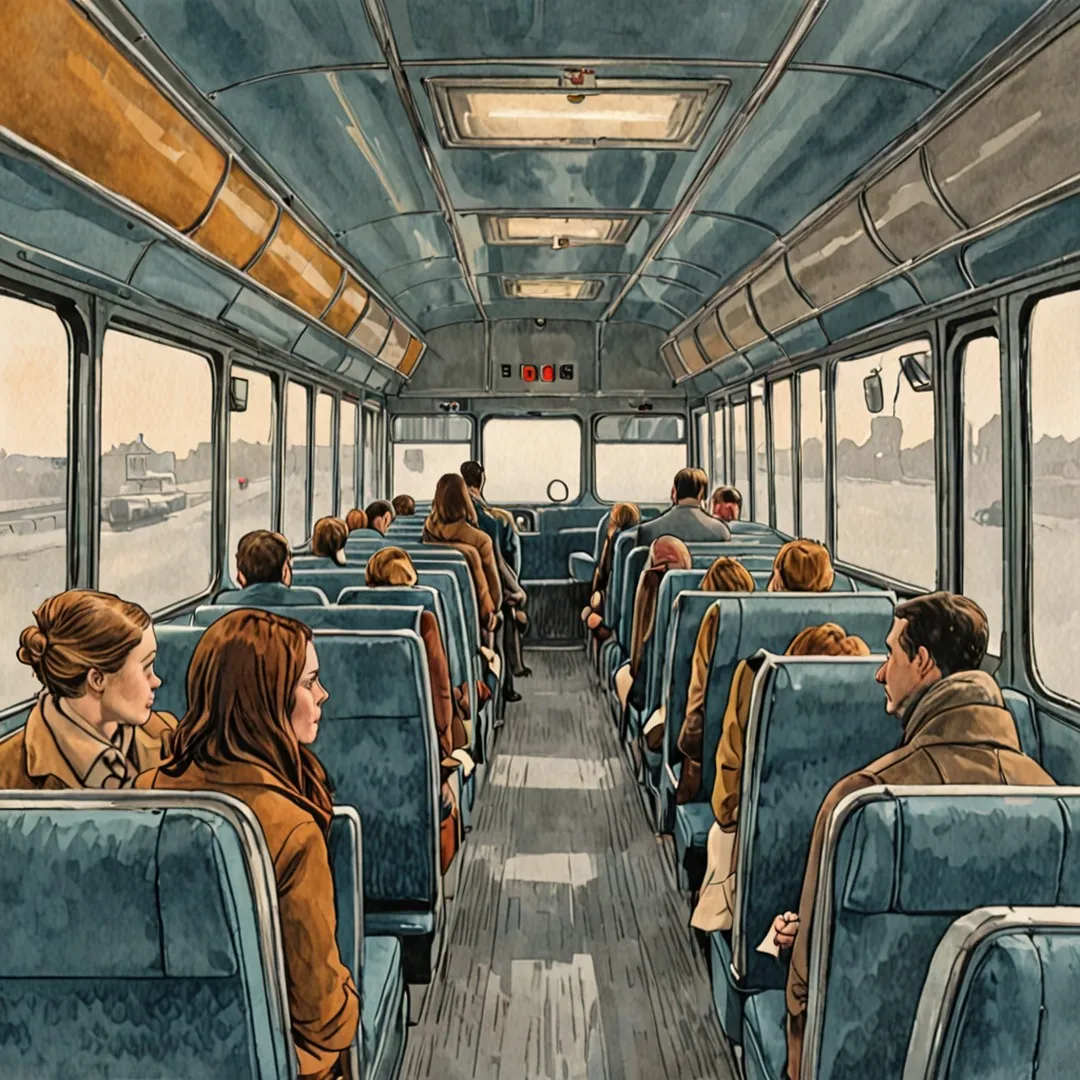
A management fable inspired by “Good to Great” by Jim Collins.
First Who, Then What
Jim Collins spent five years studying why some companies leap from good to genuinely great. One idea from that research makes many executives uncomfortable: great companies don’t first decide where they’re going. They first decide who rides the bus, who sits in each seat, and who has to get off. The destination matters, of course, but it comes second. With the right people on board, the “what” almost solves itself. And with the wrong people, no map will save the journey.
The Story
Aura Systems was growing fast. Ricardo, the founding partner, had a nagging doubt: was his operational team up to the job? One day he had to travel for business, and he left the operation in the hands of Gonzalo, his longtime trusted employee. Gonzalo was noble, ethical, loyal. The kind of person who would never fail you personally. But he lacked the firmness, the vision, and the management skills to lead a team of engineers.
The outcome didn’t take long. Gonzalo’s obsession with technical detail turned into a paralyzing bottleneck. No project shipped without passing his unrealistic standards. Operations stalled, clients started complaining, and Gonzalo began suffering from severe stress and frustration. Ricardo had avoided the uncomfortable conversation, so he ended up pushing his closest collaborator to the brink, in a role he was never built for.
The same company employed Claudia, another collaborator whose main qualification was being a personal friend of the founder. Claudia had no technical or organizational judgment, but management kept inventing roles to keep her on the payroll: supervising supervisors, managing databases, writing manuals. In every role, her lack of judgment caused massive delays and friction with the departments that actually executed.
Another restructuring came. Ricardo called in Adrian, the Operations Director, a meticulous problem solver who had earned respect through results and constant rigor. The proposal was the usual one: create a “new role” to keep him inside the company.
Adrian looked at him calmly and replied:
“I appreciate the intention, but I am not a piece of office furniture to be moved from room to room whenever management doesn’t know what to do with me. A professional needs clear purpose, real authority, and the competency to execute. Moving people without operational criteria destroys employee dignity and company performance.”
What Senior Leadership Should Learn
- False loyalty destroys both the employee and the company. Promoting a loyal, noble person to an executive position they’re not equipped to hold is not a favor. It’s setting them up for a predictable collapse and dragging the whole organization down with them. Good people deserve to be placed where they can shine, not where they will drown.
- The “office furniture” trap. Inventing roles to retain people who lack the skills, just because of personal affinity, triggers a chain reaction. Every “creative role” without real purpose becomes a bottleneck that strangles interconnected departments. Everyone pays the cost, except the person who made the decision.
- Map the seats with rigor. The right people must sit in the right seats. Real trust is not given out of sympathy: it’s built on proven capability and consistent delivery. And when someone doesn’t fit, today’s uncomfortable decision prevents tomorrow’s disaster.
Collins’s lesson is simple to say and hard to apply: first who, then what. Because people are not the most important resource of a company. The right people are.